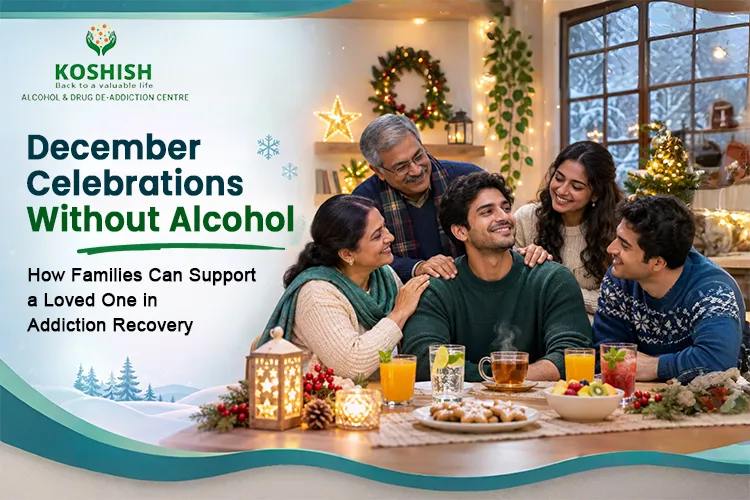
December Celebrations Without Alcohol: How Families Can Support a Loved One in Addiction Recovery
Understand the connection between depression and substance abuse, recognise warning signs, and explore treatment options for lasting recovery at Koshish De-Addiction Center, Bhubaneswar.
Festive celebrations don't need alcohol to create lasting memories. With understanding, patience, and family support, December can be a time of joy, connection, and encouragement for someone in recovery.
December is a month of celebrations.parties, family gatherings, weddings, Christmas celebrations and New Year plans . For many families, it is a time to create happy moments.
But for a family with someone recovering from alcohol or drug addiction, December can feel different.
A simple invitation to a party, meeting old friends, or visiting with people who drink can become a difficult time. Sometimes, even a question like "Just one drink, what's wrong?" can create unnecessary pressure.
Recovery is not just about staying away from alcohol or drugs. It is also about learning how to handle everyday situations, relationships, behaviors and social pressure.
As of December 2026, families can take a few thoughtful steps to make the festive season safer and more supportive for someone working towards recovery.
1. Why Can December Be Challenging During Addiction Recovery?
Festive occasions often involve alcohol, late-night gatherings and social expectancies. For someone recovering from addiction, these situations may bring back memories, habits or emotional triggers.
Some common challenges include:
Social pressure from friends and relatives
Sometimes people offer alcohol without understanding that the person is in recovery. Even when the intention is not harmful, repeated offers can make it difficult to maintain boundaries.
Meeting old friends and visiting familiar places
Certain people, locations or social groups may be associated with previous drinking or drug use. Meeting them again can create emotional challenges.
Loneliness and family expectations
Not everyone feels happy during the festive season. Family conflicts, financial stress, loneliness and personal disappointments can affect emotional well-being.
Changes in daily routine
Late nights, irregular meals, travel and disrupted routines may make it harder to follow a recovery plan.
These challenges do not mean that relapse is inevitable. They simply show why planning, professional guidance and family support matter.
2. Ways Families Can Support Someone in Recovery This December
Supporting a loved one does not require constant supervision or arguments. Small, consistent actions can make a meaningful difference.
Plan Celebrations That Do Not Depend on Alcohol
A family celebration does not need alcohol to be enjoyable
Consider arranging a family dinner, a movie night, an outdoor activity or a small gathering where alcohol is not served. A comfortable environment can help the person participate without feeling unnecessary pressure.
Avoid Offering Alcohol Even as a Joke
Statements such as "One drink will not hurt" or "Today is a special occasion" may sound harmless, but they can create pressure.
Respect the person's recovery boundaries. Friends and relatives should understand that avoiding alcohol is an important part of their recovery plan.
Encourage Open Conversations Without Blaming
Instead of asking, "Why can't you control yourself?", try asking, "How are you feeling about the upcoming celebrations?"
Listen patiently. Avoid humiliation, threats and comparisons with other people.
Addiction is a complex health condition, not simply a lack of willpower. Compassionate communication can help families build trust.
Maintain Healthy Daily Habits
Koshish can help you as Best Rehab center in Bhubaneswar Regular sleep, balanced meals, physical activity and meaningful daily routines can support overall well-being.
Encourage your loved one to continue attending scheduled counselling sessions, support meetings and follow-up appointments recommended by their treatment professionals.
3. Recognise When Professional Support Is Needed
If someone is finding it increasingly difficult to manage substance use, experiencing repeated setbacks or struggling with emotional and family problems, professional assessment may be helpful.
A qualified healthcare professional can assess the situation and recommend suitable care. Treatment needs differ from person to person.
4. Do Not Treat a Setback as the End of Recovery
Families sometimes feel angry when a person returns to substance use after a period of recovery.
However, a setback should be treated as a reason to seek support and review the recovery plan, not as a reason to insult or abandon the individual.
Contact the treating professional and discuss the next appropriate steps.
5. Make a Recovery Plan for the New Year
Instead of making unrealistic promises, encourage practical goals.
These may include attending counselling regularly, rebuilding family relationships, developing healthy interests, returning to work or studies and maintaining follow-up care.
Progress can happen through small, consistent steps.
6. When Should a Family Consider a De-addiction Centre?
Families often wait for a situation to become serious before seeking professional help. In reality, it is worth discussing an assessment earlier when substance use is affecting health, work, relationships or everyday responsibilities.
Some warning signs may include:
- Repeated unsuccessful attempts to reduce or stop alcohol or drug use.
- Spending increasing amounts of time obtaining or using substances.
- Neglecting work, education or family responsibilities.
- Noticeable changes in behaviour, sleep or personal care.
- Continuing substance use despite problems at home or work.
- Experiencing withdrawal symptoms when reducing or stopping use.
These signs do not establish a diagnosis by themselves. A healthcare professional can assess the person's condition and discuss suitable treatment options.
Important medical safety note: If a person has been drinking heavily or regularly, suddenly stopping alcohol without medical guidance can cause dangerous withdrawal symptoms. Seizures, severe confusion, hallucinations or serious shaking require urgent medical attention. Do not attempt an unsupervised detoxification programme at home.
7. What Kind of Support Can a De-addiction Centre Provide?
Addiction treatment is not limited to asking someone to stop using a substance. A suitable treatment plan may involve medical assessment, counselling, psychological support, family involvement and continuing care.
At Koshish De-addiction Centre in Bhubaneswar, the programmes described on its website include:
- Counselling: Individual and group counselling to help people understand their challenges and work towards recovery.
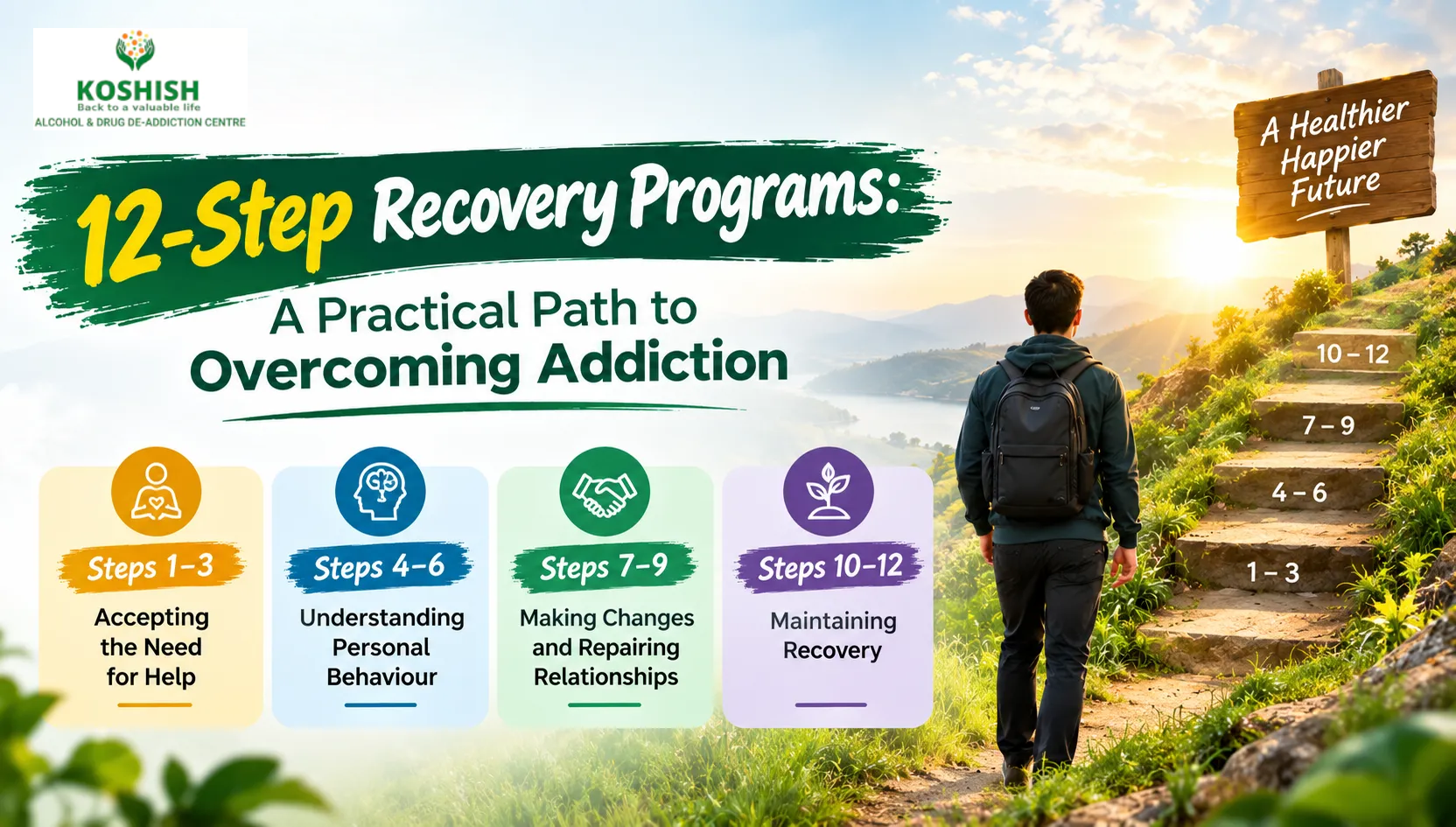
- 12-Step Programme: A structured recovery approach based on the principles of the 12-step model.
- Yoga and Meditation: Activities intended to support general physical and emotional well-being.
- Therapeutic Community Programme: A supportive environment where people can learn from shared experiences and develop healthier routines.
- Family Counselling: Support that helps family members understand their role in the recovery process.
The appropriate approach depends on the individual's medical condition, substance use history and treatment needs. A professional assessment should guide decisions about treatment and residential rehabilitation.
8. Why Consider Koshish De-addiction Centre in Bhubaneswar?
For families looking for an Alcohol De-addiction Centre in Bhubaneswar or a Drug Rehabilitation Centre in Odisha, choosing a facility requires careful consideration.
Koshish De-addiction Centre is located at Raghunathpur, Bhubaneswar. Its website describes support for alcohol and drug addiction, counselling, a 12-step programme, yoga and meditation, therapeutic community activities and family counselling.
Families can contact the centre to understand the assessment process, treatment options, medical arrangements, residential facilities and follow-up support before making a decision.
The aim should always be to find appropriate, safe and professionally guided care rather than relying on promises of instant or guaranteed recovery.
Start the New Year With Support, Not Pressure
As 2026 comes to an end, families may be thinking about new beginnings and better days ahead.
If someone in your family is struggling with alcohol or drug dependence, remember that blaming, arguing or hiding the problem rarely helps. A calm conversation and timely professional guidance can be a more constructive starting point.
Recovery takes effort, patience and continued support. Every person's journey is different, and asking for help is a positive step.
If you are looking for a Nasha Mukti Kendra in Bhubaneswar, contact Koshish De-addiction Centre to discuss the available support and assessment process.
Frequently Asked Questions
1. Why can the festive season be difficult for someone recovering from alcohol addiction?
Social gatherings, alcohol availability, peer pressure, changes in routine and emotional stress may create challenges. Planning ahead and following professional guidance can help.
2. How can families support someone recovering from drug or alcohol addiction?
Families can provide a non-judgmental environment, respect recovery boundaries, encourage treatment follow-ups and seek family counselling when appropriate.
3. When should someone contact an alcohol de-addiction centre?
When alcohol use is affecting health, relationships, work or daily responsibilities, it is advisable to seek a professional assessment. Withdrawal concerns should always be discussed with a medical professional.
4. Does addiction treatment involve only medication?
No. Depending on the individual's needs, treatment may involve medical care, counselling, psychological therapies, family support, rehabilitation and continuing care.
5. Where can I find a drug rehabilitation centre in Bhubaneswar?
Koshish De-addiction Centre is located in Raghunathpur, Bhubaneswar. Families can visit its official website or contact the centre to learn about its programmes and assessment process.
6. Can a person return to normal life after addiction treatment?
Many people work towards rebuilding their personal, family and professional lives during recovery. Outcomes differ between individuals, and continuing support may be important.
7. Is a Nasha Mukti Kendra suitable for someone who also has depression?
It may be suitable if the facility can assess the person's mental health needs and arrange appropriate psychiatric or psychological care. Families should ask whether the centre has qualified professionals or referral arrangements for co-occurring conditions. Severe depression or immediate safety concerns may require specialised mental health treatment alongside addiction care.
Koshish Deaddiction
koshishrehab@gmail.com
help@koshishdeaddiction.in
Plot No:463, Maruti Residency, Raghunathpur, Bhubaneswar, Odisha 754005
Conclusion
A new year does not require a perfect beginning. Sometimes, one honest conversation and the right support can be the beginning of meaningful change.

Leave a Reply
Required fields are marked with * . We respect your privacy and will not publish your email address.