12-Step Recovery Programs: A Practical Path to Overcoming Addiction
Learn how 12-step recovery programs support drug and alcohol addiction treatment through peer support, personal growth, and long-term recovery in Bhubaneswar, Odisha.
Finding a Drugs & Alcohol De-Addiction Centre in Bhubaneswar Odisha can be an important step towards recovery. A 12-step program offers people dealing with drug or alcohol addiction a structured way to build accountability, seek support, and work towards lasting change.
1. What Is a 12-Step Addiction Recovery Program?
A 12-step program is a peer-support approach that helps people address addiction through personal reflection, accountability, and support from others who understand similar struggles. Alcoholics Anonymous (AA) introduced this approach, and related programs now support people dealing with different forms of substance use.
The program encourages participants to acknowledge how addiction affects their lives, accept help, make changes to harmful behaviours, and maintain recovery over time. Many groups also encourage spiritual reflection, although the interpretation of spirituality varies between individuals and groups.
For someone struggling with repeated alcohol or drug use, the sense of connection can make a difference. Recovery may feel lonely at first, especially when relationships have suffered or trust has been damaged. Group meetings offer a place to speak openly without having to explain every detail of the experience.
At Koshish De-Addiction Centre in Bhubaneswar, understanding the available recovery options can help individuals and families make informed decisions about treatment.
2. What Is a 12-Step Addiction Recovery Program?
Most 12-step groups follow a shared set of principles, but meetings can differ depending on the organisation. Participants usually attend regular meetings, listen to others' experiences, share their own concerns when comfortable, and gradually work through the steps.
A typical program may include:
- Group meetings: Participants discuss recovery challenges and share experiences.
- Personal reflection: Members examine behaviours, decisions, and patterns associated with addiction.
- Accountability: Participants take responsibility for their actions and work towards correcting past mistakes where appropriate.
- Peer guidance: A sponsor or experienced member may provide support between meetings.
- Ongoing participation: Regular attendance helps participants stay connected to recovery support.
There is no requirement to share every personal detail during a meeting. People can usually participate at their own pace, while respecting the group's guidelines.
3. The 12 Steps Explained in Simple Terms
Drugs & Alcohol De-Addiction Centre in Bhubaneswar Odisha The steps are commonly associated with Alcoholics Anonymous, and other fellowships adapt them to their specific needs. Their wording and interpretation may vary slightly between groups.
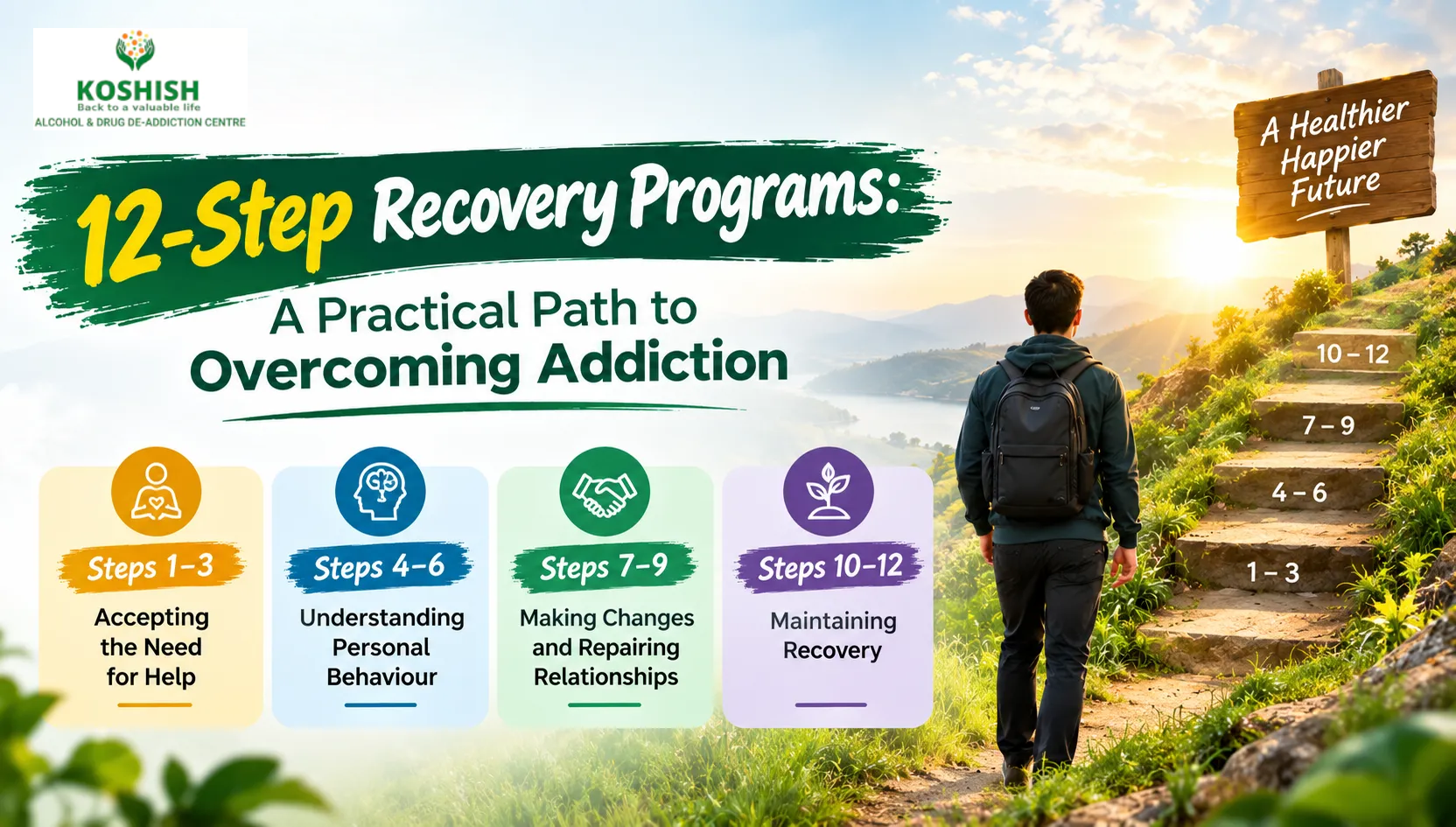
Steps 1 - 3: Accepting the Need for Help
The first steps involve acknowledging that addiction has become difficult to control, recognising the need for support, and becoming willing to accept help. This stage can be uncomfortable, particularly for people who have spent years hiding their substance use.
Steps 4 - 6: Understanding Personal Behaviour
Participants reflect on their actions, attitudes, and past experiences. They identify patterns that may contribute to harmful decisions and become willing to work on them. The purpose is honest self-examination, not self-punishment.
Steps 7 - 9: Making Changes and Repairing Relationships
These steps encourage humility, personal change, and efforts to make amends for past harm. Making amends does not mean contacting every person from the past regardless of the circumstances. Safety, boundaries, and the wishes of others must be respected.
Steps 10 - 12: Maintaining Recovery
The final steps focus on continued self-reflection, spiritual or personal growth, and helping others. Participants learn to recognise warning signs early and seek support before a lapse becomes a longer return to substance use.
The steps are not a race. Some people move through them gradually, revisiting earlier stages when new challenges arise.
4. Benefits of 12-Step Programs in Addiction Treatment
A 12-step program can complement professional addiction care in several ways.
- Regular support: Meetings give participants a consistent place to discuss cravings, setbacks, and everyday pressures.
- Reduced isolation: Connecting with people who have faced similar difficulties may reduce shame and help participants feel understood.
- Personal accountability: Reflection and regular participation encourage people to recognise their choices and take responsibility for recovery.
- Practical coping skills: Listening to others can introduce useful ways to manage triggers, rebuild routines, and handle difficult emotions.
- Continued recovery support: Peer meetings can remain available after a formal treatment program ends, giving people an ongoing support network.

These benefits depend on personal circumstances, participation, and the quality of support available. A 12-step program is not a guaranteed cure, and different people may respond better to different recovery approaches.
5. Can a 12-Step Program Treat Drug and Alcohol Addiction Alone?
For many people, peer support is helpful, but it should not replace medical assessment or professional treatment when these are needed.
A treatment plan for substance use disorder may include medical supervision, counselling, behavioural therapies, family support, and medication where clinically appropriate. A qualified professional can assess which options suit the person's condition, substance use history, and physical and mental health needs.
Alcohol withdrawal can sometimes cause seizures or other life-threatening complications. Withdrawal from certain other substances may also require medical care. Anyone with heavy or prolonged alcohol use should seek medical advice before stopping suddenly.
If a person experiences severe confusion, seizures, difficulty breathing, or becomes unresponsive, seek emergency medical help.
Combining peer support with professional care may offer a more suitable recovery plan than relying on meetings alone. The right combination depends on the individual's needs.
6. Who Can Benefit from a 12-Step Recovery Program?
A 12-step program may suit people who want regular peer support, are willing to reflect on their behaviour, and feel comfortable participating in a group setting.
It may also help people who have completed residential treatment and want continued support as they return to work, family life, or education.
However, group meetings are not the right fit for everyone. Some people prefer individual counselling, professionally led group therapy, secular recovery programs, or a combination of approaches. Language, cultural preferences, accessibility, and comfort with the group's spiritual principles can influence the decision.
Family members can also benefit from separate support groups that help them understand addiction, set healthy boundaries, and care for their own well-being.
7. How to Support a Loved One During Recovery
Family support can be helpful, but recovery remains the responsibility of the person receiving treatment. Relatives can offer encouragement without trying to control every decision.
Practical ways to help include:
- Speak calmly and avoid humiliating or blaming the person. Encourage a professional assessment when substance use is affecting health or daily life. Support attendance at counselling, treatment appointments, or peer meetings. Set clear boundaries around money, safety, and behaviour at home. Recognise progress without expecting recovery to happen in a straight line.
A lapse does not automatically mean that treatment has failed. It is a reason to review the treatment plan, identify triggers, and seek additional support when needed.
8. Finding Addiction Treatment in Bhubaneswar
Choosing a Drugs & Alcohol De-Addiction Centre in Bhubaneswar Odisha involves more than comparing facilities. Families should ask about medical supervision, counselling services, staff qualifications, treatment planning, privacy, and aftercare.
Before admission, find out whether the centre assesses withdrawal risks and can arrange appropriate medical care. Ask how progress is reviewed and what support is available after discharge.
Koshish De-Addiction Centre, available through koshishdeaddiction.in, is a local point of contact for people seeking information about addiction treatment in Bhubaneswar. Families can discuss their concerns, explain the person's circumstances, and ask which services are available.
A thoughtful treatment decision should be based on the person's clinical needs rather than promises of a quick or guaranteed recovery.
9. Frequently Asked Questions
1. What is the main purpose of a 12-step program?
Its main purpose is to support recovery through peer connection, personal accountability, self-reflection, and continued participation in a recovery community.
2. How long does a 12-step recovery program take?
There is no fixed completion period. People work through the steps at different speeds, and many continue attending meetings for months or years as part of their ongoing recovery.
3. Are 12-step programs only for alcohol addiction?
No. Alcoholics Anonymous focuses on alcohol use, while other fellowships, such as Narcotics Anonymous, support people recovering from drug addiction. The most suitable group depends on the person's needs and preferences.
4. Can someone attend a 12-step meeting while receiving professional treatment?
Yes. Peer-support meetings can complement counselling, medical care, and residential or outpatient treatment. The treatment team can help coordinate support when appropriate.
5. Is a 12-step program suitable for everyone?
No single approach works for everyone. People should consider their preferences, recovery goals, and clinical needs when choosing between peer support, therapy, medication, or combined treatment.
6. How can families find a de-addiction centre in Bhubaneswar?
Families can contact a local treatment provider, ask about medical supervision and counselling, and confirm the available services, admission process, and aftercare arrangements before making a decision.
Contact Koshish De-Addiction
If drug or alcohol use is affecting your life or a family member's well-being, speaking with a qualified treatment provider can help clarify the available options.
Koshish Deaddiction
koshishrehab@gmail.com
help@koshishdeaddiction.in
Plot No:463, Maruti Residency, Raghunathpur, Bhubaneswar, Odisha 754005
Conclusion
A 12-step recovery program can help people build accountability, connect with others, and maintain recovery after treatment. Its greatest value often comes from regular participation and honest self-reflection. For people dealing with drug or alcohol addiction, combining peer support with appropriate professional care can help address both immediate treatment needs and the challenges that continue after discharge. Drugs & Alcohol De-Addiction Centre in Bhubaneswar Odisha Choosing suitable support is a practical step towards a healthier life.

Leave a Reply
Required fields are marked with * . We respect your privacy and will not publish your email address.